About Judy
She has spent her adult life in the therapy room — first as a student, then as a clinician, then as a teacher, and now as an author.
Judy Mahler Steinfeld, LCSW, is a licensed psychotherapist with more than four decades of clinical experience. The bus framework did not come from a research paper. It came from thousands of hours in a therapy room, watching the same patterns surface in different people, and gradually finding the language that made those patterns workable.
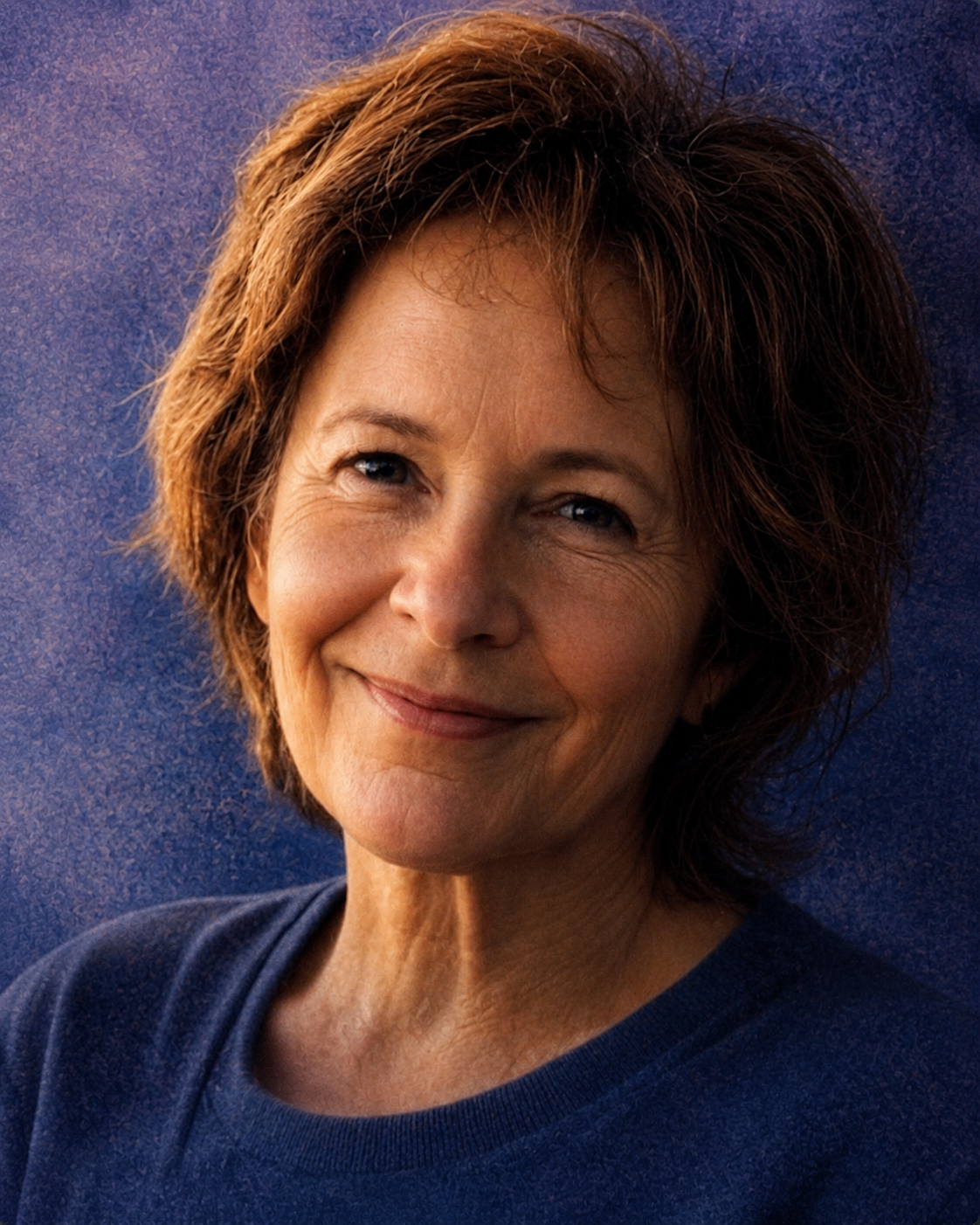
Judy trained at Columbia University and completed her postgraduate work at the Gestalt Center for Psychotherapy and Training in New York City. Gestalt therapy — with its emphasis on direct experience, present-moment awareness, and the full integration of every part of the self — became the foundation of everything she does. She served on the Gestalt Center's faculty through the 1980s, a period she describes as the years when the work stopped being something she practiced and became something she lived.
What makes her perspective distinct is not the length of her experience but the honesty of it. She has done this work on herself. The book carries the credibility of someone who has not just observed the process, but lived it.
The bus framework did not begin as a book concept. It grew out of years of sitting with patients and helping them use this memorable metaphor to quietly change the course of their lives.
Clinical Background
Over four decades of practice, Judy has worked with people at every stage of life and every kind of crisis: grief, addiction, relational breakdown, the slow erosion that comes from never quite feeling good enough. Her approach has always been experiential rather than analytical. She is less interested in helping people understand their patterns from the outside than in helping them encounter those patterns directly — feel the sensations in the body, and find a way through.
The tools change. The underlying work does not.
Teaching & Speaking
Judy has presented the Who's Driving Your Bus? framework to groups across New York, Los Angeles, and Santiago, Chile — including Rotary Clubs, the American Women's Club, business groups, writers' groups, and book clubs. Her teaching style is direct, warm, and deeply practical.
The response at each engagement has been immediate: people recognize themselves in the framework within minutes, and the most common question afterward is always the same — when will the book be available?
The Work
At the heart of Judy's approach is a simple question: who is driving your bus? Not as a verdict. As an invitation. A way to begin seeing the inner passengers — the Judge, the Pleaser, the Fear Maker, the Love Addict, the Hider — with clarity and compassion rather than shame.
The goal is not to silence those passengers or push them off the bus. It is to meet them, understand where they came from, and gently move them back to their seats. They can ride. They just cannot drive.
From the Therapy Room
The question that changed everything.
Early in her career, Judy worked with Timothy — a seven-year-old on an inpatient psychiatric unit at Kings County Hospital in Brooklyn who kicked, spat, and attacked anyone who came near him. He had a burn scar on his back shaped like a hot iron.
The question Judy brought to Timothy was not what is wrong with him. It was what happened to him. It took seven months of consistent presence before he allowed her to put an arm around him.
That question — not what is wrong with you, but what happened to you — became the foundation of everything that followed. It is the question underneath every page of this book.
The Bigger Picture
Who's Driving Your Bus? is only the beginning.
This book is intended as the first in a broader body of work. Future volumes will explore specific applications of the bus framework — intimate relationships, aging, and loss. Each one grounded in the same belief: that the parts of us shaped by fear and survival are not flaws to fix. They are passengers to understand.